Satellite Beach does not gently “use” a dock. It tests it with salt air, strong sun, moisture, storms, boat traffic, wet feet, and everyday waterfront living. DC Marine Construction, Inc. helps homeowners look past surface-level appearance and choose dock materials that make sense for Florida’s coastal conditions. If you are planning saltwater dock construction in Florida, the right material choice can help your dock feel stronger, safer, and more practical for years of use.
The Satellite Beach Dock Material Test
Instead of asking, “What is the best dock material?” ask a better question:
What does this dock need to survive?
A Satellite Beach dock may deal with hot afternoons, salty air, sudden storms, boat lines, fishing gear, family weekends, and constant moisture. That means materials should be chosen for more than a clean look on installation day.
Your dock needs to pass a few real-life tests:
- Can it handle salt exposure?
- Will it feel safe under wet feet?
- Can it support boating routines?
- Will the hardware hold up?
- How much maintenance will it need?
- Does it fit the way your family uses the waterfront?
That is the difference between choosing materials and choosing materials wisely.
Saltwater Dock Construction in Florida Starts with Exposure
For saltwater dock construction in Florida, exposure level matters from the beginning. Not every waterfront property faces the same conditions.
Some docks sit in calmer areas with lighter use. Others see frequent boat activity, stronger sun exposure, more moisture, and rougher weather. A dock used every weekend by boaters needs a different level of material planning than a dock used mostly for relaxing or fishing.
Homeowners should think about three exposure levels:
Light exposure: occasional use, calmer water, limited boat traffic.
Moderate exposure: regular foot traffic, boating, salt air, and weather.
Heavy exposure: frequent use, direct sun, storm exposure, boat lift needs, and stronger water movement.
The more exposure your dock faces, the more important it becomes to choose materials that work as a full system.
What Counts as Marine Grade Dock Materials?
Marine grade dock materials are materials selected for waterfront conditions. They are chosen because they can better handle moisture, salt air, structural use, and outdoor exposure.
These may include:
- Pressure-treated wood
- Composite decking
- Marine-grade fasteners
- Corrosion-resistant connectors
- Protected or wrapped pilings
- Proper framing materials
- Hardware suited for coastal use
Here is the key point: a dock is not one material. It is a team.
The decking, pilings, framing, fasteners, and layout all work together. A beautiful deck surface cannot make up for weak hardware or poorly planned support. For coastal properties, the hidden pieces matter just as much as the parts homeowners see every day.
Pressure Treated vs Composite Dock: The Real Comparison
One of the biggest choices homeowners face is pressure treated vs composite dock decking. Both can make sense, but they serve different priorities.
Pressure-Treated Wood
Pressure-treated wood has a classic waterfront feel. It is familiar, practical, and often more budget-friendly upfront than some upgraded surface options.
It may be a good fit if you want:
- A traditional dock look
- A familiar material
- A more natural surface
- A practical upfront investment
The tradeoff is maintenance. Wood can weather, splinter, check, or fade over time, especially in coastal conditions. Homeowners who choose wood should expect some upkeep as part of ownership.
Composite Decking
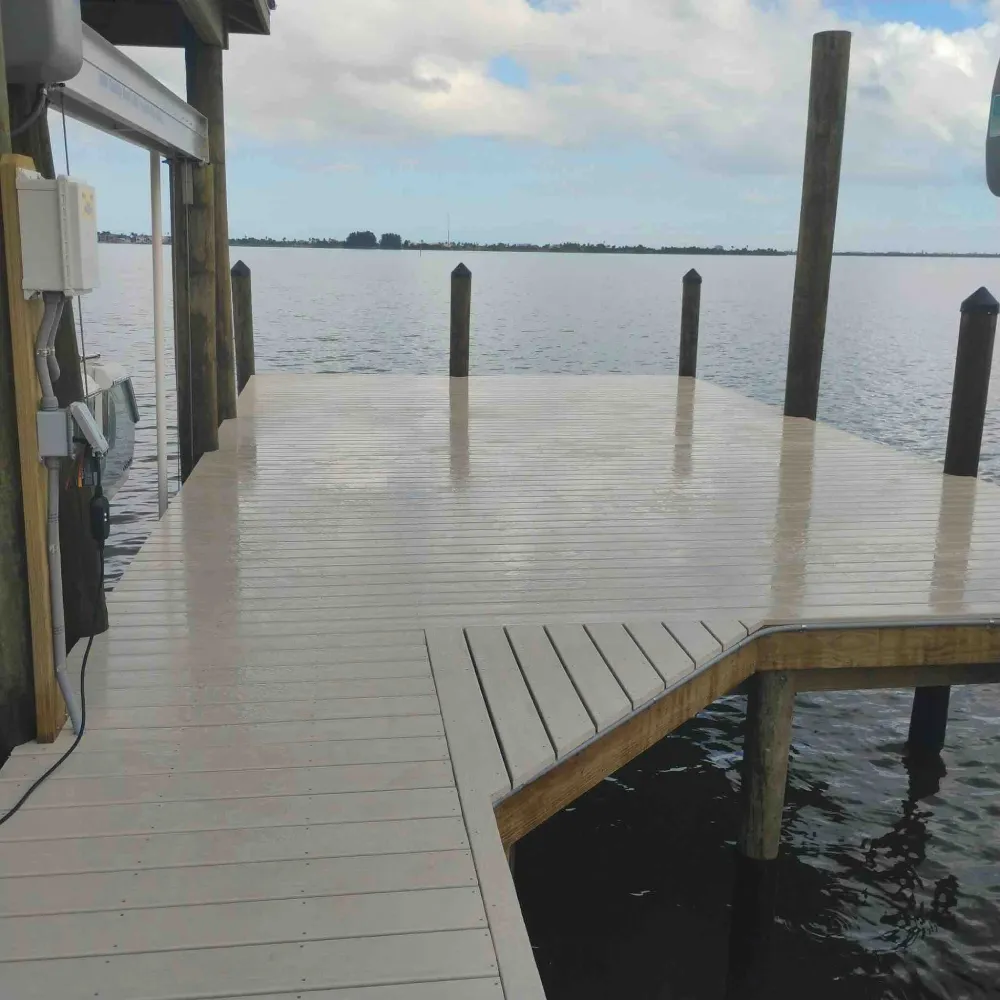
Composite decking often appeals to homeowners who want a cleaner, more polished look with reduced routine surface maintenance. It can be a strong option for family use, entertaining, and a more finished waterfront appearance.
It may be a good fit if you want:
- A more refined surface
- Lower routine maintenance
- Less concern about splinters
- A modern dock appearance
The tradeoff is that not all composite products perform the same. Heat, traction, wet-surface comfort, and product quality should all be considered before choosing.
Which One Wins?
There is no automatic winner. The best choice depends on how you use the dock, how much maintenance you want, how much sun and salt exposure the property gets, and what kind of long-term value matters most to you.
The Boat Test
If boating is part of the plan, the dock needs to be designed around more than foot traffic.
Boat use can affect layout, piling placement, access points, lift planning, and structural needs. A dock built for boating should support loading, tying off, boarding, cleaning gear, and moving safely around the water.
For coastal dock building in Florida, the boat test should include:
- Current boat size
- Possible future boat upgrades
- Clearance needs
- Safe boarding points
- Strong structural support
- Proper hardware and fasteners
A boat-first dock needs more than good decking. It needs the right support system underneath.
The Small Parts That Make a Big Difference
Homeowners often ask about deck boards first. That makes sense, but the smaller parts deserve attention too.
Fasteners, connectors, framing, and piling protection all affect dock performance. In saltwater settings, corrosion resistance is especially important. If the hardware is not suited for the environment, the dock may age faster or need attention sooner.
For saltwater dock construction in Florida, the material package should include more than the surface boards. It should account for what holds the dock together, what supports it below, and how the full structure handles daily coastal exposure.
Quick Homeowner Material Quiz
Answer yes or no:
- Will people walk on the dock barefoot often?
- Will the dock be used for boating every week?
- Do you want a boat lift now or later?
- Is lower maintenance a major priority?
- Is a classic wood look important?
- Will kids, guests, or older family members use the dock?
- Does the property get heavy sun exposure?
- Are you concerned about storm season?
- Do you want a more polished dock appearance?
- Are you trying to balance upfront cost with long-term value?
If you answered “yes” to several of these, your material decision deserves a closer look. The right choice should fit your property, your lifestyle, and your expectations.
FAQs About Marine-Grade Dock Materials
Question: What are marine grade dock materials?
Answer: Marine grade dock materials are materials selected for waterfront and coastal conditions. They may include pressure-treated wood, composite decking, corrosion-resistant fasteners, protected pilings, proper framing materials, and hardware suited for salt air and moisture.
Question: Is pressure-treated wood or composite better for a dock?
Answer: The pressure treated vs composite dock decision depends on your priorities. Pressure-treated wood offers a classic feel and practical upfront cost, while composite can offer a cleaner look and reduced routine surface maintenance.
Question: Why is saltwater tough on dock materials?
Answer: Salt air, moisture, sun, and storms can affect wood, metal, fasteners, framing, and surface materials. That is why homeowners planning saltwater dock construction in Florida should consider the entire dock system, not just the top boards.
Question: What should Satellite Beach homeowners consider before choosing materials?
Answer: Homeowners should consider dock use, boat size, future lift plans, sun exposure, salt exposure, maintenance expectations, surface comfort, and long-term durability.
Question: Can better materials help a dock last longer?
Answer: Yes, better material planning can support a longer-lasting dock when the decking, pilings, framing, fasteners, and design work together. Materials matter, but proper planning and construction matter just as much.
Build a Stronger Saltwater Dock With DC Marine Construction, Inc.
The best dock material is not just the one that looks good in a sample. It is the one that can handle salt air, hot sun, wet feet, boating routines, hardware stress, and the real demands of Satellite Beach waterfront living. For homeowners planning saltwater dock construction in Florida, DC Marine Construction, Inc. can help compare material options and create a smarter dock plan built for coastal durability. Call DC Marine Construction, Inc. today to schedule your consultation and start building a dock that is stronger, smarter, and ready for life on the water.