A boathouse isn’t just a place to park a boat. It’s protection for a six-figure investment that spends most of its life sitting in saltwater, sun, and storm season. Along Florida’s Space Coast, where the Indian River Lagoon and Intracoastal Waterway shape day-to-day life on the water, a well-built structure can add years to a boat’s life and real dollars to a home’s resale value. Skip this step, and homeowners usually pay for it later, in hull damage, sun-bleached upholstery, or a boat lift that fails right as a storm rolls in. Here’s what a custom boathouse actually costs, what design choices matter, and why so many local owners now treat it as a priority instead of an afterthought.
Why Melbourne Homeowners Are Investing in Boathouses
Florida’s climate is gorgeous and merciless at the same time. UV exposure, salt spray, and the sudden squalls that blow off the lagoon wear down gelcoat, upholstery, and electronics faster than most first-time boat owners expect. A properly engineered boathouse slows all of that down. Beyond protection, waterfront buyers increasingly treat a boathouse as a real amenity, right up there with a pool or an outdoor kitchen. It tells buyers the property was built for the water lifestyle, not just parked next to it. Insurance plays into it too. Some carriers offer better terms, or fewer exclusions, when a vessel is covered instead of sitting exposed on an open lift. For a lot of owners working with a boathouse builder in Melbourne FL, the decision really just comes down to math: a few years of avoided storage fees, repairs, and depreciation can cover most of the build cost on its own.
What Drives the Cost of a Custom Boathouse
Pricing varies a lot from lot to lot, since no two waterfront properties are set up the same way. Still, a handful of factors tend to move the number every time.
Size and boat type. A single-slip structure for a center console costs a lot less than a double-bay build meant for a larger cruiser, or a boat plus jet skis. Beam width, air draft, and overall length all factor into the footprint.
Piling and foundation work. Melbourne’s soft, sandy bottom and shifting water table mean pilings often need to go deeper than they would on an inland project. This is usually the single biggest line item in the budget, and it’s not the place to cut corners. Undersized pilings are the most common reason boathouses fail during a storm.
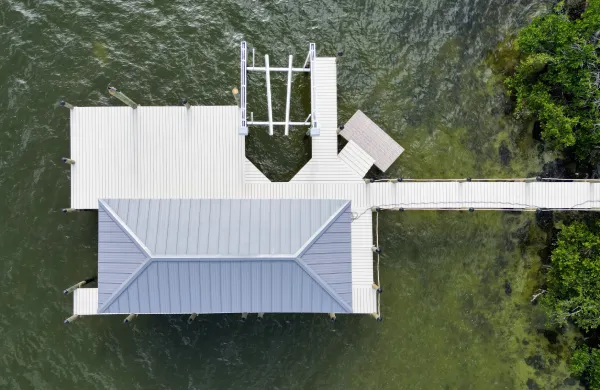
Roof structure and materials. A basic open-air canopy runs cheaper than a fully enclosed, hip-roofed structure with architectural shingles that match the main house. Metal roofing generally holds up better than shingles in coastal wind zones, and most builders will recommend it if the budget allows.
Lift integration. Boat lifts (cradle, floating, or hydraulic) add cost, but they’re pretty much non-negotiable for anyone serious about protecting the hull. Capacity needs to match the boat’s dry weight plus a safety margin, not just what it weighs right now.
Permitting and environmental review. Projects touching the Indian River Lagoon often need sign-off from the local building department, the Florida Department of Environmental Protection, and sometimes the Army Corps of Engineers, especially near seagrass beds or manatee zones. Permitting can add weeks to the timeline, so it’s smart to plan around that delay rather than get surprised by it.
Custom boathouses in Melbourne cover a wide price range because of all these variables. Any builder worth hiring should walk through a line-item estimate before a single piling gets driven. Vague, all-in quotes are usually a sign to keep shopping.
Design Choices That Actually Matter
It’s tempting to think about looks first, but the boathouses that hold up best are engineered around function, then styled to fit.
Open vs. enclosed structures. Open-sided designs let air move through, which cuts down on mildew and heat buildup, and they tend to be cheaper to build and easier to permit. Enclosed boathouses offer more security and storage, but they need real ventilation planning or moisture becomes a problem fast.
Roof pitch and wind rating. Coastal wind loads on this stretch of Florida aren’t something to guess at. A roof built to current wind-zone codes, with proper tie-downs and bracing, is often the difference between a structure that survives a named storm and one that ends up as debris in the yard.
Decking material. Composite decking has become the go-to choice for a lot of custom boathouses in Melbourne. It resists rot and skips the annual sealing that pressure-treated wood needs, even though it costs more upfront.
Matching the main residence. Buyers and appraisers tend to respond well when a boathouse echoes the home’s rooflines, trim color, and materials, rather than looking like something bolted onto the dock as an afterthought.
A solid boathouse builder in Melbourne FL will walk homeowners through these trade-offs early, before the concrete truck even shows up. Changing direction mid-build is almost always where costs get out of hand.
Practical Insights From Local Waterfront Owners
Talk to enough owners who’ve been through this, and the same handful of lessons keep coming up.
- Order pilings and lift equipment early. Marine-grade materials can be slow to arrive, and a delay here holds up everything else on the schedule.
- Don’t undersize the lift. Anyone planning to upgrade boats in the next five years should size the lift for the next boat, not just the one they own today.
- Budget for maintenance from day one. Setting aside even a small amount each year for pressure washing, hardware checks, and roof inspections keeps small problems from turning into expensive ones.
- Ask about storm history. A builder who knows how past hurricanes actually treated structures along the lagoon will design differently than one working off a generic template pulled from somewhere else in the state.
None of this is theoretical. It’s the kind of thing that shows up over and over in the repair calls and change orders local builders field every storm season.
Frequently Asked Questions
Question: How long does it take to build a custom boathouse in Melbourne, FL?
Answer: Most projects take 6 to 12 weeks once permits are approved, though the actual timeline depends on the size and complexity of the build. Permitting itself can add several more weeks on top of that, depending on the environmental review required near the lagoon, so it helps to start the process well before you actually want to break ground.
Question: Do I need a permit to build a boathouse on the Indian River Lagoon?
Answer: Yes. Local building permits are required for any new boathouse or dock structure, and projects near seagrass beds or manatee protection zones usually need extra review from state agencies, sometimes federal ones too. Skipping this step can lead to fines, forced removal, or costly redesigns later, so it’s worth working with a builder who already knows the local process.
Question: What’s the difference between a boat lift and a boathouse?
Answer: A boat lift raises the vessel out of the water to prevent hull fouling, blistering, and osmosis damage from constant water exposure. A boathouse goes a step further by adding a roof, and often walls, which protects the boat from sun, rain, and wind-blown debris on top of keeping it elevated above the waterline year-round.
Question: Will a custom boathouse increase my property value?
Answer: In most waterfront markets, a well-built, code-compliant boathouse is seen as a value-adding amenity, similar to a dock, seawall, or outdoor kitchen. The actual return depends on the local market, the quality of construction, and how well the structure matches the style of the home, but appraisers and buyers generally view it as a meaningful upgrade rather than a cosmetic add-on.
Question: Can an existing dock be converted into a boathouse?
Answer: Sometimes, if the existing pilings and structure are strong enough to handle the added weight of a roof and any lift equipment. A builder will usually need to inspect the current foundation first to determine whether conversion is realistic or whether a full rebuild would actually be the safer, more cost-effective option in the long run.
Book Your Custom Boathouse Build With DC Marine Construction, Inc.
Waiting until hull damage, a failed lift, or storm season forces the issue almost always costs more than building it right the first time. DC Marine Construction, Inc. designs and builds custom boathouses across Melbourne, FL, handling permitting, engineering, and construction from start to finish. Spots on the build schedule fill up fast heading into peak season, so don’t wait to lock yours in. Contact DC Marine Construction, Inc. today to book your consultation and get a firm quote on your custom boathouse.