Storm damage is one of the biggest concerns for Florida waterfront property owners. Hurricanes, storm surge, high winds, and powerful wave action place tremendous stress on dock systems, making proper design and construction essential for long-term performance. While no dock is completely storm-proof, selecting the right dock system can improve resilience and reduce the risk of costly damage.
This guide compares floating docks and fixed docks, explaining how each performs during severe weather and the factors that should influence your decision. As a trusted dock construction company in Florida, DC Marine Construction, Inc. helps waterfront property owners choose dock solutions designed for their shoreline conditions, boating needs, and long-term goals.
Why Storm Damage Is a Major Concern for Florida Docks
Florida’s coastal environment exposes docks to year-round conditions that gradually weaken structural components. Saltwater, fluctuating tides, strong currents, hurricanes, and everyday wear all contribute to the aging process. During severe storms, high winds, floating debris, and powerful wave action place additional stress on a dock, increasing the risk of structural damage if it is not designed and built for its surrounding environment.
A dock designed specifically for its waterfront conditions is better equipped to withstand changing weather while providing reliable performance throughout the year.
Investing in professional dock construction services in Florida helps ensure your dock is designed to withstand local water conditions, weather patterns, and long-term environmental exposure.
How Floating Docks Work
Floating docks are supported by flotation systems that allow the structure to rise and fall with changing water levels, tides, and storm surge. Rather than remaining at a fixed height, they move with the water while staying secured by guide piles or anchoring systems.
Most floating docks consist of flotation modules, flexible connections, marine-grade decking, corrosion-resistant hardware, and secure anchoring components that work together to maintain stability. Because these docks are designed to move, professionally engineered anchoring systems and proper installation are essential for keeping movement controlled during rough conditions.
Floating docks are often well suited for waterfront properties with changing water levels, but their overall performance still depends on the quality of their construction and how well they match the site’s conditions.
How Fixed Docks Work
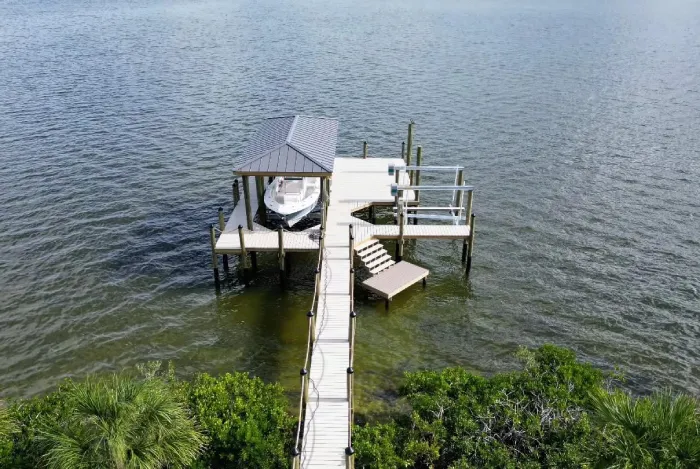
Fixed docks are permanent structures supported by pilings driven into the waterway floor. Their stationary design provides a stable platform for boating, fishing, and other waterfront activities because the dock remains at the same elevation regardless of changing water levels.
A typical fixed dock includes structural pilings, support beams, framing systems, decking materials, and reinforced connections that distribute loads throughout the structure. Since these docks cannot move with rising water, their long-term performance depends on proper pile depth, structural engineering, and materials capable of withstanding Florida’s coastal environment.
Fixed docks are commonly selected for locations where stability is a priority and water level changes are more predictable.
Floating Docks vs. Fixed Docks During Storms
Neither floating nor fixed docks are guaranteed to avoid storm damage. Their performance depends on construction quality, site conditions, ongoing maintenance, and whether the dock is designed for the property’s specific waterfront environment.
The comparison below highlights how each system typically responds during severe weather.
| Factor | Floating Dock | Fixed Dock |
| Storm surge | Rises with changing water levels | Remains at a fixed elevation |
| Wave action | Moves with water and relies on secure anchoring | Transfers forces through pilings and structural framing |
| High winds | May experience movement if improperly secured | Depends on piling strength and structural integrity |
| Repairs after storms | Floats, anchors, and connection points should be inspected | Pilings, framing, decking, and hardware should be inspected |
| Long-term durability | Depends on flotation systems and anchoring quality | Depends on piling installation, materials, and maintenance |
Storm Surge
Storm surge is one of the biggest differences between floating and fixed dock systems. Because floating docks rise with increasing water levels, they can reduce some of the stress created by vertical water movement during a storm. Fixed docks remain at a constant elevation, so their ability to withstand storm surge depends on proper engineering, pile depth, and elevation planning.
Wave Action and Wind Exposure
Floating docks are designed to move with waves, but that movement must remain controlled. Secure anchoring systems help limit excessive shifting and reduce strain on dock components during severe weather.
Fixed docks rely on their pilings to resist the forces created by wind and waves. When properly engineered and installed, these pilings provide excellent stability, although they must still withstand the significant loads generated during major storms.
Repairs After Storms
Regardless of dock type, every waterfront structure should be inspected after severe weather before being used again. Floating docks should be checked for damage to flotation units, anchors, hinges, and connection hardware, while fixed docks should be inspected for issues involving pilings, framing, decking, and structural fasteners.
Routine inspections help identify minor damage early, allowing repairs to be completed before problems become more extensive and costly. If significant damage is found, working with professionals who provide dock construction services in Florida can help ensure repairs are completed safely and restore your dock’s long-term performance.
Which Dock Is Best for Your Waterfront Property?
There is no one-size-fits-all dock system. The right choice depends on your shoreline conditions, water depth, tidal fluctuations, boating needs, maintenance expectations, and storm exposure. A dock that works well in a protected canal may not be suitable for an exposed shoreline with stronger currents and wave action.
Your intended use, budget, future maintenance, and local permitting requirements should also factor into your decision. Working with an experienced dock construction contractor in Florida ensures these considerations are evaluated before construction begins. A professional site assessment can help determine whether a floating or fixed dock is the best fit for your waterfront property.
Frequently Asked Questions About Floating and Fixed Docks
Question: Are floating docks safer during hurricanes?
Answer: Floating docks can offer advantages during hurricanes because they rise with storm surge instead of remaining at a fixed elevation. However, their performance still depends on proper anchoring, quality materials, professional installation, and the severity of the storm. No dock system is completely immune to hurricane damage.
Question: Which dock lasts longer, floating or fixed?
Answer: The lifespan of a dock depends more on construction quality, materials, environmental conditions, and routine maintenance than on the dock style itself. Both floating and fixed docks can provide many years of reliable performance when they are professionally designed and properly maintained.
Question: Do floating docks require more maintenance?
Answer: Floating docks require periodic inspections of flotation systems, anchors, hinges, and connection hardware because these components experience regular movement. Fixed docks also require ongoing maintenance, including inspections of pilings, framing, decking, and hardware to identify wear, corrosion, or structural concerns before they become larger problems.
Question: Can fixed docks survive storm surge?
Answer: Yes, fixed docks can withstand storm conditions when they are properly engineered for the site. Their performance depends on factors such as piling depth, dock elevation, structural design, and the intensity of the storm. Like any waterfront structure, they have design limits and should be inspected after severe weather.
Question: Which dock adds more value to a waterfront property?
Answer: A well-designed dock that complements the property’s waterfront conditions can improve both functionality and curb appeal. The value comes from quality construction, durability, and how well the dock meets the owner’s needs rather than whether it is floating or fixed.
Choose the Right Dock Design for Your Florida Waterfront Property
Both floating and fixed docks offer unique advantages, and the best choice depends on your shoreline, water conditions, and boating needs. Understanding how each system performs during storms can help you make a confident, long-term investment.
As a trusted dock construction company in Florida, DC Marine Construction, Inc. designs and builds custom dock solutions tailored to each property. Contact our team today to schedule a consultation and receive expert recommendations for your waterfront project.