How Melbourne’s Coastal Resiliency Plan Is Shaping Seawall Construction in Melbourne FL
Melbourne’s waterfront has long offered both lifestyle appeal and long-term value. As sea levels rise and high tides reach farther inland, however, the City of Melbourne is rethinking how waterfront properties are planned and protected. These changes are already influencing how new shoreline projects are designed today.
Melbourne’s Coastal Resiliency Plan reflects a shift away from building solely for past conditions. Seawalls are now designed with future water levels in mind, directly shaping seawall construction in Melbourne FL. Homeowners who understand this approach early are better prepared to protect their property, investment, and peace of mind.
If you’ve noticed subtle changes along your shoreline, this evolving approach is worth paying attention to.
Melbourne Is Planning for the Future, Not the Past
Melbourne’s Coastal Resiliency Plan uses sea level rise projections through 2040 and 2070 to guide infrastructure decisions today. Instead of relying only on historical tide data, the city is accounting for gradual sea level rise and more frequent tidal flooding. This forward-looking approach helps identify vulnerable areas before flooding becomes a routine problem.
For waterfront homeowners, this means new seawalls must be designed to perform well over decades, not just under current conditions. Elevation, drainage, and long-term durability are now central to how projects are reviewed and approved.
Why “Designing for Today” Is No Longer Enough
For many years, seawalls were built to match known conditions, including existing tides, typical storms, and established flood zones. Rising baseline water levels have changed that equation. A seawall that once experienced occasional high water may now face constant exposure.
Designing only for today’s conditions can shorten a seawall’s lifespan and lead to premature repairs. By accounting for future water levels, modern designs reduce long-term stress on the structure and help avoid costly upgrades sooner than expected.
Seawall Construction in Melbourne FL Is Being Re-Engineered
Modern seawall construction in Florida reflects these planning changes through smarter engineering and updated materials. New seawalls often incorporate increased elevations, advanced drainage systems, and components designed specifically for saltwater environments.
Engineers now focus on how water behaves behind the wall just as much as wave action in front of it. Proper backfill support, pressure relief, and soil stabilization help reduce movement and erosion over time. These details may not be visible from the surface, but they play a major role in long-term performance.
If your seawall was built years ago, it may not reflect these newer design standards.
Infrastructure Vulnerability Is Driving Smarter Design
Local sea level rise models show increased vulnerability in low-lying areas near Crane Creek and the Eau Gallie River. Roads, yards, and utilities in these areas may experience more frequent flooding, even during normal high tides. These findings are influencing how seawall construction services in Melbourne FL are planned and implemented across the city.
As a result, seawalls are increasingly viewed as part of a broader resiliency strategy rather than standalone barriers. They must work in coordination with drainage systems, surrounding elevations, and nearby infrastructure to reduce overall risk.
Drainage: The Detail That Makes or Breaks a Seawall
One of the most important lessons from Melbourne’s resiliency planning is the role of drainage. When water becomes trapped behind a seawall, pressure builds and erosion accelerates. Over time, this hidden force can cause walls to lean, crack, or fail prematurely.
New designs prioritize drainage systems that allow water to move safely through and away from the structure. Pressure relief and engineered backfill help prevent soil saturation and loss. While drainage isn’t always visible, it often determines how long a seawall truly lasts.
Many homeowners are surprised to learn drainage, not height, is why their seawall struggles.
What This Means for Homeowners Planning a Project
Homeowners planning a new seawall or replacement should expect a more detailed design and permitting process. With seawall construction in Melbourne FL, engineering reviews now focus on long-term performance under future conditions rather than short-term solutions. This often includes closer evaluation of elevation, drainage, and soil conditions behind the wall. While this may add steps upfront, it typically prevents costly issues and surprise repairs later.
Planning ahead allows homeowners to make informed decisions instead of reacting to visible damage or flooding. It also provides flexibility in design, materials, and timing, especially when coordinating with dock upgrades or shoreline improvements. Ultimately, early planning helps ensure the finished seawall aligns with both current needs and future conditions, delivering stronger long-term results.
Future-Ready Seawalls Protect More Than Property
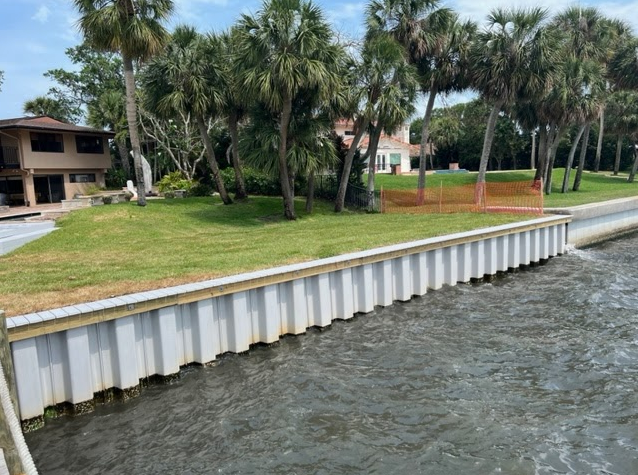
A properly designed seawall does more than hold back water. It stabilizes docks, protects landscaping, and preserves usable outdoor space. As water levels rise, these benefits become increasingly important for maintaining both function and enjoyment.
Building for future conditions reduces emergency repairs and unexpected maintenance. It also helps homeowners feel confident that their shoreline protection is working quietly in the background.
Thinking long-term now can make waterfront ownership far less stressful later.
Frequently Asked Questions
Question: Why are seawall standards changing in Melbourne?
Answer: Melbourne’s Coastal Resiliency Plan uses long-term sea level projections, requiring new projects to consider future conditions rather than relying only on past tide data.
Question: Will existing seawalls need to be replaced immediately?
Answer: Not necessarily. However, many older seawalls were not designed for frequent high-water exposure. An inspection can help determine whether reinforcement or replacement is recommended.
Question: How does sea level rise affect permitting?
Answer: Permits may require additional engineering review to ensure seawalls meet updated elevation and drainage expectations tied to future conditions.
Question: Does seawall construction in Melbourne FL cost more now?
Answer: While materials and design may be more robust upfront, they often reduce long-term maintenance, repairs, and replacement costs.
Question: When should homeowners start planning for these updates?
Answer: Early planning provides more options and prevents rushed decisions after flooding or visible damage occurs.
Protect Your Shoreline Before Conditions Get Worse, Schedule a Seawall Consultation Today with DC Marine Construction, Inc.!
Melbourne’s waterfront is changing, and proactive homeowners are planning ahead. DC Marine Construction, Inc. provides seawall construction in Melbourne FL designed for long-term performance under evolving conditions. From initial consultation to final installation, every detail is handled with clarity, experience, and forward-thinking planning.
Schedule your consultation with DC Marine Construction, Inc. today and get clear guidance on protecting your shoreline for the years ahead.